What Creatinine Levels Mean After Kidney Transplant
Learn what creatinine levels may mean after kidney transplant, why they may rise or change, and how monitoring helps protect your new kidney.


Medically reviewed by Dr. Peale Chuang, MD
Last updated: September 8, 2026
Medically reviewed by Dr. Peale Chuang, MD
Last updated: September 8, 2026

Creatinine is a common blood test used after kidney transplant to measure how well the kidney is cleaning waste from the blood. Levels can rise or change for many reasons, so it is normal to have questions about your results. Below, understand what serum creatinine levels after kidney transplant may mean and how your care team uses trends and other tests to get a fuller picture of your kidney health.
What does creatinine measure?
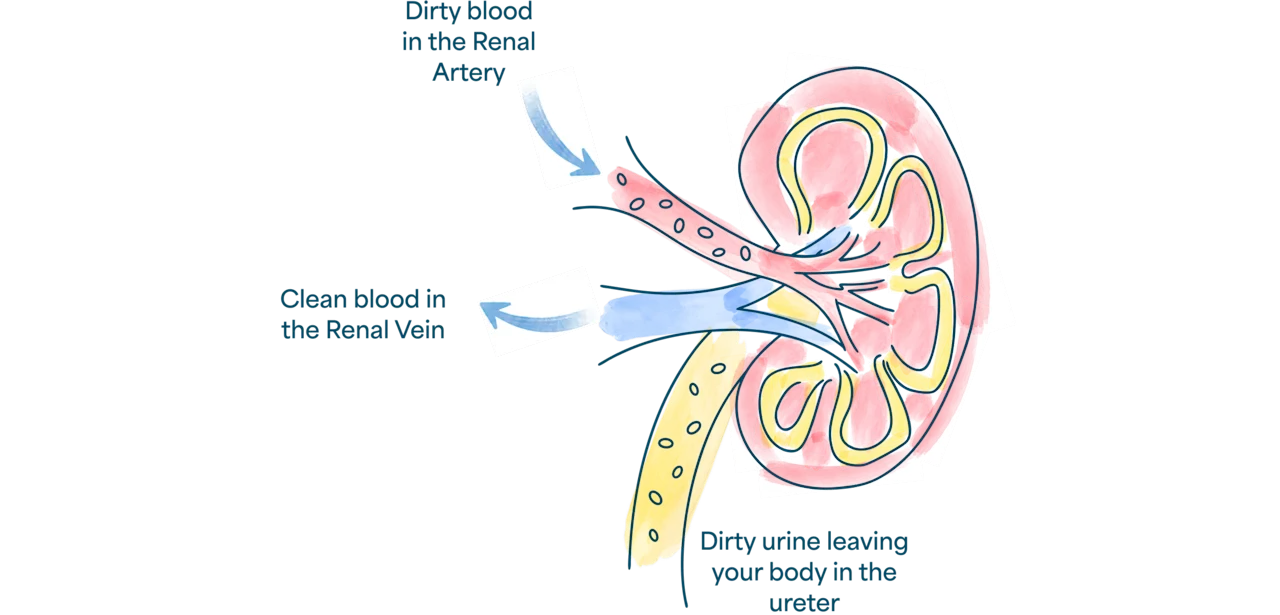
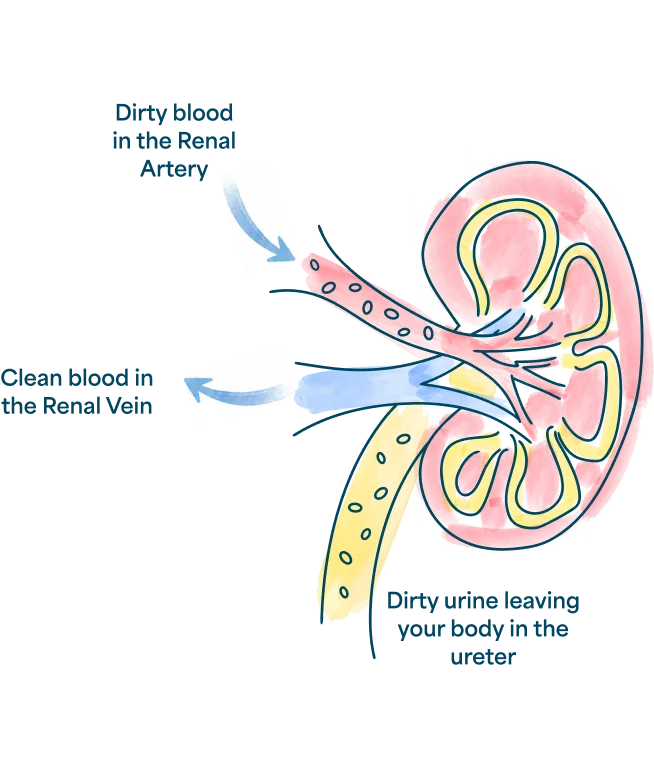
Creatinine is a waste product made by the muscles. Healthy kidneys filter creatinine out of the blood and remove it through urine (pee).
Serum creatinine is a blood test that measures how much creatinine is in the bloodstream. It is commonly used after kidney transplant to help show how well the kidney is filtering waste.
When the kidney is working well, creatinine levels often stay within a normal range. If the kidney is not filtering effectively, creatinine can build up in the blood.
Why creatinine is only one part of the picture
Creatinine is an important and widely used test, but it does not tell the whole story on its own. Your care team looks at creatinine alongside other results, symptoms, and trends over time.
Changes can show later: Creatinine levels do not always go up right away when something is wrong. The kidney may already be under stress or injured before the number changes.
More than one test may be needed: A creatinine result alone does not always give a complete or precise measure of how well the kidney is working.
Outside factors can affect results: Creatinine levels can also be influenced by muscle mass, age, sex, hydration, and some medicines—not just kidney transplant health.



How your care team may look beyond creatinine
Donor-derived cell-free DNA (dd-cfDNA), such as AlloSure, is an additional blood test that can help care teams monitor the health of the new kidney. It measures small fragments of DNA from the donor kidney circulating in the blood.
When the transplanted kidney is injured, some donor cells can become damaged and release more DNA into the bloodstream. Higher levels of donor-derived DNA may be a sign of kidney injury or rejection, sometimes before changes appear in traditional tests like creatinine, so your care team may look at both tests.


What monitoring can look like over time
Your testing plan may look different as recovery progresses. Early after transplant, results are often checked more closely. Over time, your care team focuses on patterns, stability, and changes that may need attention.
Learning your normal range
Your care team looks for your typical creatinine level over time rather than relying on a single result. In the first few months after transplant, levels may change more as the new kidney settles in.
Watching for changes over time
Repeated testing helps spot meaningful changes and may help to find potential issues early. Soon after transplant, even small changes may be watched closely. Later on, longer-term patterns often become more important.
Helping guide your care
As results become more stable, ongoing monitoring helps your care team make informed decisions about treatment and long-term kidney health.

Understanding your test results can help you have more informed conversations with your care team and feel more confident in your care. Using both traditional and newer monitoring tools can give a complete picture of your kidney health over time.
Commonly asked questions
Small changes in creatinine levels after transplant are common and can happen for many reasons, including hydration, medicines, and recent activity. That is why your care team looks at patterns over time rather than one result alone.
Related Content

How your kidney is monitored after transplant
Understand how regular testing helps your care team monitor kidney function and look for early signs of injury or rejection.

What are the signs and symptoms of kidney transplant rejection
Learn rejection signs, possible symptoms, and how regular monitoring can help catch problems early.

Transplant terms, explained
A simple guide to transplant terms, helping you understand your care, tests, and next steps.
CareDx is committed to providing scientifically supported educational content for transplant recipients and caregivers. All content is for educational purposes only and is not intended to serve as medical advice or replace guidance from your healthcare provider. Always seek the advice of your transplant team with any questions you may have regarding your specific medical condition.